The Telephone Was Going to Ruin Everything: A Familiar Panic in a Different Century
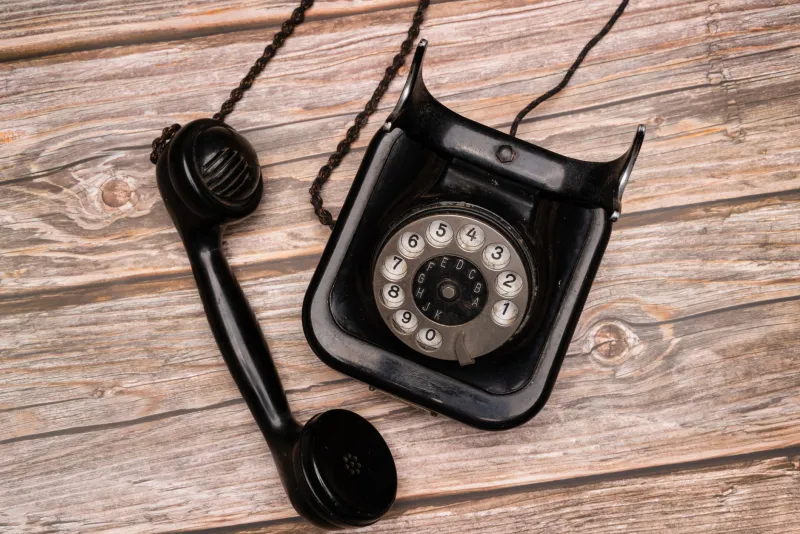
In 1881, a physician writing in a Boston medical journal warned that the telephone was producing a new class of nervous disorder among its heaviest users. The symptoms he described — difficulty concentrating, compulsive checking, a diminished capacity for face-to-face interaction — would not look out of place in a 2023 research paper on smartphone dependency. The technology was four years into commercial deployment. The pathologizing had already begun.
This is not a coincidence. It is a pattern. And the pattern is old enough, and consistent enough, that it deserves to be treated not as a series of independent cultural reactions but as a single recurring psychological event — one that tells us considerably more about human anxiety than it does about any particular technology.
The Anatomy of the 1880s Telephone Panic
The commercial rollout of telephone service in American cities began in earnest around 1878. By the mid-1880s, the technology had penetrated sufficiently into urban professional life that a coherent critical discourse had formed around it. That discourse had several distinct threads, each of which maps with uncomfortable precision onto contemporary arguments about social media, texting, and AI-assisted communication.
The fraud and deception problem. Early telephone critics were acutely concerned that the technology enabled impersonation at a distance. Without visual confirmation of identity, a caller could claim to be anyone. Newspapers in the 1880s documented telephone-enabled confidence schemes with the same breathless specificity that modern outlets apply to phishing attacks and AI voice cloning. The concern was legitimate. The telephone did enable new forms of fraud. But the coverage consistently implied that the technology had created a criminal impulse that previously did not exist, rather than simply providing a new channel for an impulse that was ancient.
The collapse of social boundaries. Perhaps the most persistent complaint was that the telephone abolished the social protocols that governed who could speak to whom. A tradesman could now ring the home of a wealthy client without going through the proper channels. A stranger could reach a woman in her private residence without a formal introduction. Commentators described this as a kind of social contamination — the intrusion of the inappropriate into the sanctified space of the domestic interior.
Read that concern again, and then read any 2010s op-ed about Twitter's destruction of the barriers between public figures and their audiences. The vocabulary differs. The anxiety is identical.
The addiction of the young. By the 1890s, as telephone access expanded beyond businesses and wealthy households, observers began focusing on younger users — particularly young women, who were documented spending extended periods in telephone conversation with friends. This was characterized, repeatedly, as a kind of compulsive behavior that displaced more wholesome activities, weakened the mind, and substituted shallow chatter for meaningful engagement.
The specific population targeted by this concern — young women using communication technology in ways that older observers found excessive and socially unproductive — has appeared in virtually every subsequent technology panic, from the moral alarm over teenage girls' use of the telephone in the 1950s to the contemporary discourse about social media and adolescent mental health.
The Degradation of Conversation
Among the more intellectually serious criticisms leveled at the telephone was the argument that it degraded the quality of human communication. The concern had two components. First, that the telephone, by enabling effortless contact, would reduce the motivation to cultivate the art of letter-writing — a discipline that required reflection, composition, and the considered expression of thought. Second, that telephone conversation itself, conducted without the social cues of physical presence, would produce a shallower mode of exchange.
These arguments were made by people who were not fools. Some of them were made by people who were genuinely thoughtful about language and communication. And they were not entirely wrong — the telephone did change the nature of written correspondence, and telephone conversation is a different cognitive experience than face-to-face exchange.
But the critics made a consistent error that their successors have continued to make: they evaluated the new communication form against the idealized version of the old one, rather than against its actual practice. The letter-writing that the telephone supposedly displaced was, in reality, conducted by a minority of the population with the leisure and education to do it well. For most people, the telephone did not replace elegant epistolary exchange. It replaced not communicating at all.
The same analytical error appears in every subsequent cycle. Texting did not replace deep telephone conversation for most teenagers — it replaced the logistical silence between conversations. Social media did not replace the thoughtful civic discourse of some imagined prior era — for many users, it replaced not participating in public discourse at all.
Why the Script Doesn't Change
The consistency of the telephone panic with every subsequent communication technology panic is striking enough that it demands an explanation. The easy version is that people simply fear change, and that each new technology triggers a reflexive conservatism dressed up in the language of social concern. This is partially true but insufficient.
A more precise account recognizes that each new communication technology genuinely does change something real about social interaction, and that the anxiety this produces is not irrational. The telephone really did dissolve certain social boundaries. Social media really has altered the dynamics of public discourse. The concerns raised in each panic are not fabrications.
What changes in each cycle is the attribution. The critics consistently locate the source of the disruption in the technology rather than in the underlying human drives that the technology is amplifying. The telephone did not create the fraudster, the social climber, or the compulsive communicator. It gave them a new instrument. The instrument is new in each generation. The drives are not.
This is what history, functioning as an honest psychology laboratory, consistently demonstrates. The five-thousand-year record of human behavior contains no evidence of a communication technology that fundamentally altered human motivations. It contains abundant evidence of technologies that provided new channels for motivations that were already present — and of critics who, in their alarm about the channel, lost sight of the source.
The Utility of the Panic
It is worth asking who benefits from the recurring cycle of technology panic, because benefit there is. Moral entrepreneurs — clergy, physicians, journalists, eventually politicians — gain cultural authority by positioning themselves as guardians against technological harm. Existing industries facing disruption gain rhetorical ammunition. Regulatory bodies gain jurisdiction.
This does not mean the concerns are cynically manufactured. Most of the telephone critics of the 1880s were sincerely alarmed. But sincerity and accuracy are different qualities, and the historical record suggests that the panic, whatever its emotional authenticity, has consistently served interests beyond the protection of the public it claimed to defend.
The telephone survived its critics. So, in various forms, did every subsequent technology that provoked the same response. What did not survive — in any of these cycles — was the specific social arrangement that the critics were defending. The boundaries the telephone dissolved did not return. The letter-writing culture that critics mourned did not recover.
History does not suggest that the critics were wrong to notice the change. It suggests they were wrong about what the change meant — because they were studying the technology when they should have been studying themselves.