The Con Artist as Architect: How Pre-Regulation Wall Street Mapped the Human Mind

Photo: George Eastman House, No restrictions, via Wikimedia Commons
In 1869, Jay Gould and James Fisk attempted to corner the entire United States gold market. The scheme required bribing a presidential brother-in-law, manufacturing false confidence in government inaction, and convincing hundreds of investors that a scarcity that did not yet exist soon would. When the corner collapsed on Black Friday, September 24th, it wiped out fortunes across the country and triggered a financial panic that rippled through the economy for months.
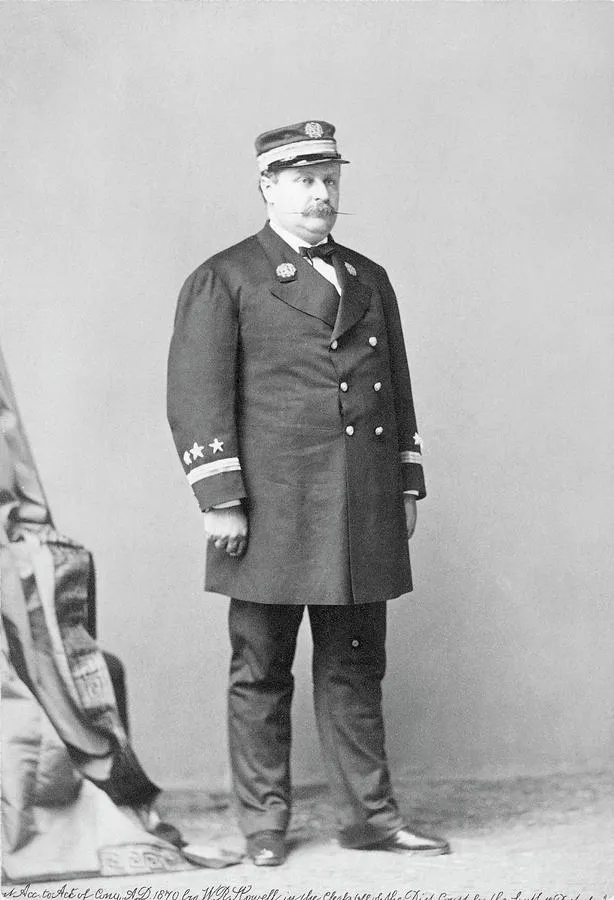 Photo: James Fisk, via images.fineartamerica.com
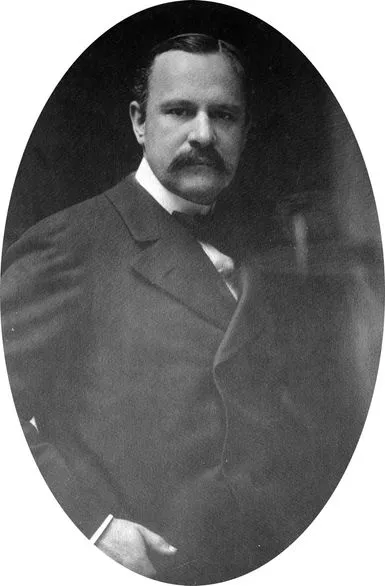 Photo: Jay Gould, via cdn.britannica.com
Gould and Fisk were not subtle men. But they were, in a functional sense, applied psychologists. Every mechanism they deployed — the manufactured scarcity, the trusted intermediary, the false signal of insider knowledge — maps directly onto the cognitive biases that behavioral economists would spend the following century naming and cataloging. They did not know what 'loss aversion' was. They knew, from practice, exactly how to trigger it.
This is what makes the pre-regulation era of American finance so instructive. It was an uncontrolled experiment, run on millions of subjects, with no ethical oversight and no institutional memory loss. The results are preserved in court records, newspaper archives, and the financial ruin of countless ordinary Americans. What they document is not a series of isolated crimes. They document the stable architecture of human financial psychology, exploited with increasing sophistication over decades.
The Trusted Intermediary and the Illusion of Vetting
One of the most reliable tools in the nineteenth-century financial fraudster's kit was the respected endorser. Before a speculative scheme could attract retail investors — the clerks, farmers, and small merchants whose accumulated savings represented real capital — it needed to acquire the visible approval of someone those investors already trusted.
This is why so many of the era's most spectacular frauds were anchored by the names of ministers, local politicians, and respected businessmen. The Credit Mobilier scandal of the 1870s, which implicated sitting congressmen in the fraudulent profits of railroad construction, worked partly because congressional involvement signaled legitimacy to investors who lacked the means to evaluate the underlying business themselves. If the men who made the laws were investing, surely the investment was sound.
This is not a failure of intelligence. It is a feature of rational cognition under uncertainty. When you cannot evaluate a complex financial instrument on its merits, you look for credible proxies — people whose judgment you trust and whose interests you assume are aligned with your own. The con artist's job is to manufacture those proxies. The nineteenth century was extraordinarily permissive about this manufacturing. The internet, it turns out, has been nearly as permissive.
The celebrity cryptocurrency endorsement, the finance influencer's enthusiastic recommendation, the anonymous message board post from someone who claims to have done the research — these are structural descendants of the minister who stood up at a town meeting to vouch for a land scheme. The technology changes. The cognitive shortcut being exploited does not.
Manufactured Scarcity and the Urgency Engine
Among the most consistent features of pre-regulation financial fraud was the artificial deadline. Shares in a given venture were always — always — about to become unavailable. The opportunity was closing. The insiders were nearly full. The ordinary investor who hesitated would find the door shut against him and watch from the outside as others profited.
None of this was usually true. The scarcity was manufactured, the deadline invented, and the 'insiders' were often fictional. But the psychological function was precise: urgency disrupts deliberation. When a person believes they are about to miss an irreversible opportunity, the cognitive load of careful evaluation is crowded out by the emotional pressure of impending loss. Loss aversion — the well-documented human tendency to weight potential losses more heavily than equivalent gains — does not require sophisticated triggering. It requires only the credible suggestion that a window is closing.
The mechanics of the 2021 meme stock frenzy, the initial coin offering booms of 2017 and 2021, and the pump-and-dump schemes that have migrated from penny stock newsletters to encrypted messaging groups are structurally identical to what was happening on the floor of the New York Stock Exchange in the 1880s. The velocity is higher. The audience is larger. The cognitive exploit is the same.
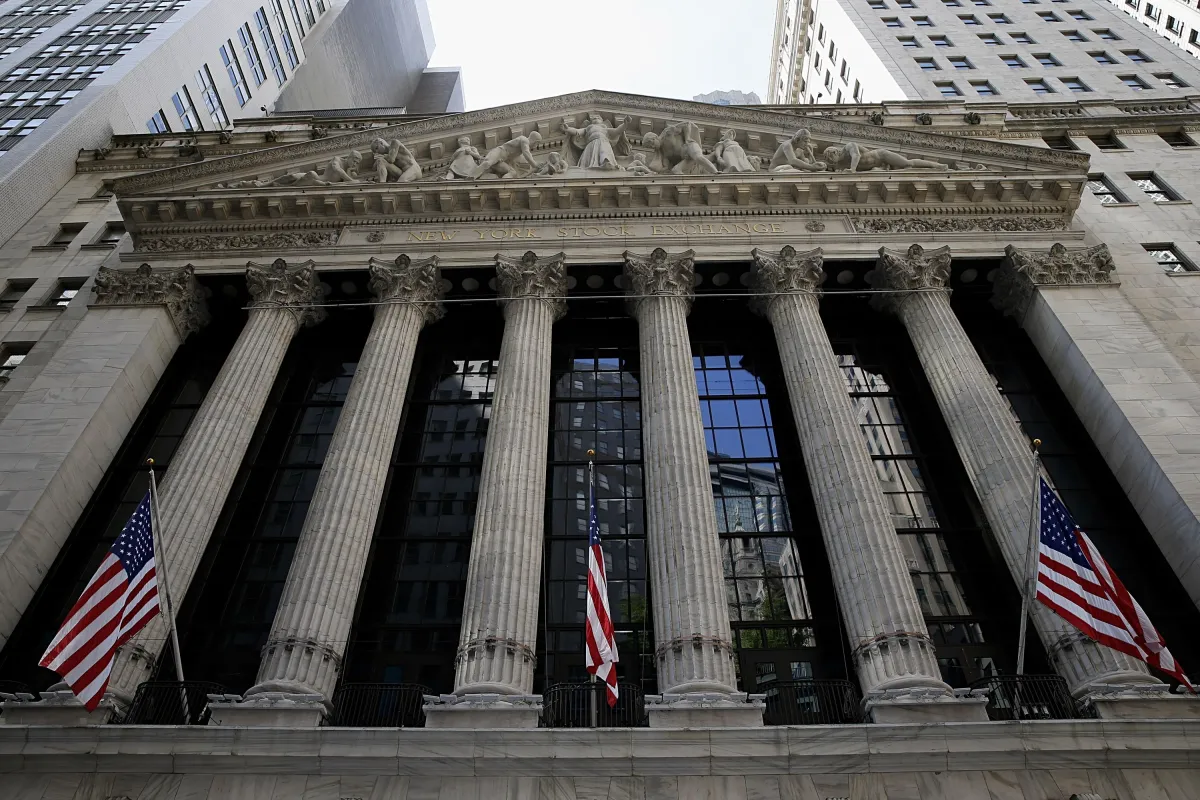 Photo: New York Stock Exchange, via www.thoughtco.com
Social Proof as Contagion
Perhaps the most powerful mechanism in the pre-regulation fraudster's repertoire was social proof — the visible evidence that other people were already invested and already profiting. In an era before reliable financial disclosure, the primary signal available to a small investor was the behavior of other small investors. If people you knew were buying, buying seemed rational. If the price was rising, rising prices seemed to confirm the underlying value.
This is not irrationality. In most domains, the aggregate behavior of a crowd contains genuine information. The problem arises when the crowd's behavior has been seeded by manipulation — when the initial buyers are confederates, the rising price is engineered, and the visible enthusiasm is performed rather than felt.
The psychological literature calls this an 'information cascade': a situation in which individuals, observing others' choices and inferring information from them, abandon their own private signals and follow the crowd. The pre-regulation markets were cascade machines. Bucket shops — establishments that allowed customers to bet on stock prices without actually purchasing shares — were particularly effective cascade generators, because the concentration of activity in a single room made the social proof visible and immediate.
The modern equivalent is a Reddit thread, a Discord server, or a TikTok video with three million views. The medium is different. The cascade mechanics are identical.
Why Regulation Is a Confession, Not a Solution
The Securities Act of 1933 and the Securities Exchange Act of 1934 — the foundational legislation of modern American financial regulation — were not written because anyone believed they would change human psychology. They were written because the Depression had made it impossible to pretend that markets self-corrected for fraud. The disclosure requirements, the prohibitions on market manipulation, the creation of the SEC: these were engineering responses to known cognitive vulnerabilities.
You regulate manufactured scarcity by requiring disclosure. You regulate false social proof by prohibiting coordinated manipulation. You regulate the trusted intermediary problem by licensing advisors and mandating fiduciary standards. Every major provision of securities law is, at its core, a patch for a specific psychological exploit that nineteenth-century fraudsters had already discovered and deployed.
The patches work imperfectly, for the same reason that software patches work imperfectly: the underlying vulnerability cannot be removed. It is not a bug in the system. It is a feature of the hardware — the human brain, running cognitive firmware that evolved long before financial markets existed and has not been meaningfully updated since.
This is what the historical record of pre-regulation American finance actually tells us. Not that people were more gullible then, or that markets were more corrupt, or that the era was uniquely lawless. It tells us that when the institutional constraints on exploitation are removed, the exploitation that emerges is remarkably consistent — because the cognitive architecture being exploited is remarkably consistent. The con artists of the 1880s and the architects of the next crypto mania are working from the same manual. They just found it in different places.