The House Always Won: How Bucket Shops Engineered the Retail Trading Brain a Century Before Zero-Commission Apps

In 1889, a Chicago alderman named John Coughlin — not himself a man of delicate financial ethics — described the bucket shop as "the poor man's stock exchange." He meant it as a defense. The courts, the financial establishment, and eventually the federal government took a different view. What is striking, from the distance of more than a century, is that both assessments were correct.
 Photo: John Coughlin, via c8.alamy.com
The bucket shop was, in fact, a place where working Americans could participate in the movement of financial markets with a small amount of capital and no need for a broker's introduction. It was also a mechanism engineered, at every point of contact, to extract that capital as efficiently as possible. These two facts were not in tension. They were the same fact.
What a Bucket Shop Actually Was
The term itself derives from the practice of "bucketing" orders — accepting a customer's bet on a stock price movement without actually executing a trade on any exchange. The shop operator took the opposite side of every transaction. When the customer won, the shop paid. When the customer lost, the shop kept the margin. Since the shop's survival depended on customers losing more than they won, and since the shop controlled the price feeds, the information environment, and the physical space in which decisions were made, the structural advantage was not subtle.
At their peak in the 1880s and 1890s, bucket shops operated in every American city of meaningful size. They were furnished to resemble legitimate brokerage offices — ticker tape machines, chalkboards displaying current prices, the visual grammar of financial seriousness. This was not incidental. The environmental design was part of the psychological apparatus.
Customers who entered a space that looked like a place where serious financial decisions were made felt, neurologically, that they were making serious financial decisions. The cognitive authority of the environment reduced the skepticism a customer might apply to the terms of the transaction. This is not a 19th-century phenomenon. It is a feature of human cognition that has not changed since the Pleistocene, and it remains one of the most reliable tools in the interface designer's kit.
The Democratization Argument and Its Shadow
Bucket shop operators were not shy about the ideological framing of their enterprise. They positioned themselves as enemies of the financial establishment, providing access to ordinary citizens that the New York Stock Exchange and its associated brokerage houses deliberately withheld. There was genuine substance to this argument. The NYSE in the Gilded Age was not a neutral marketplace. It was a cartel, and its membership requirements, commission structures, and minimum transaction sizes effectively excluded anyone without significant capital.
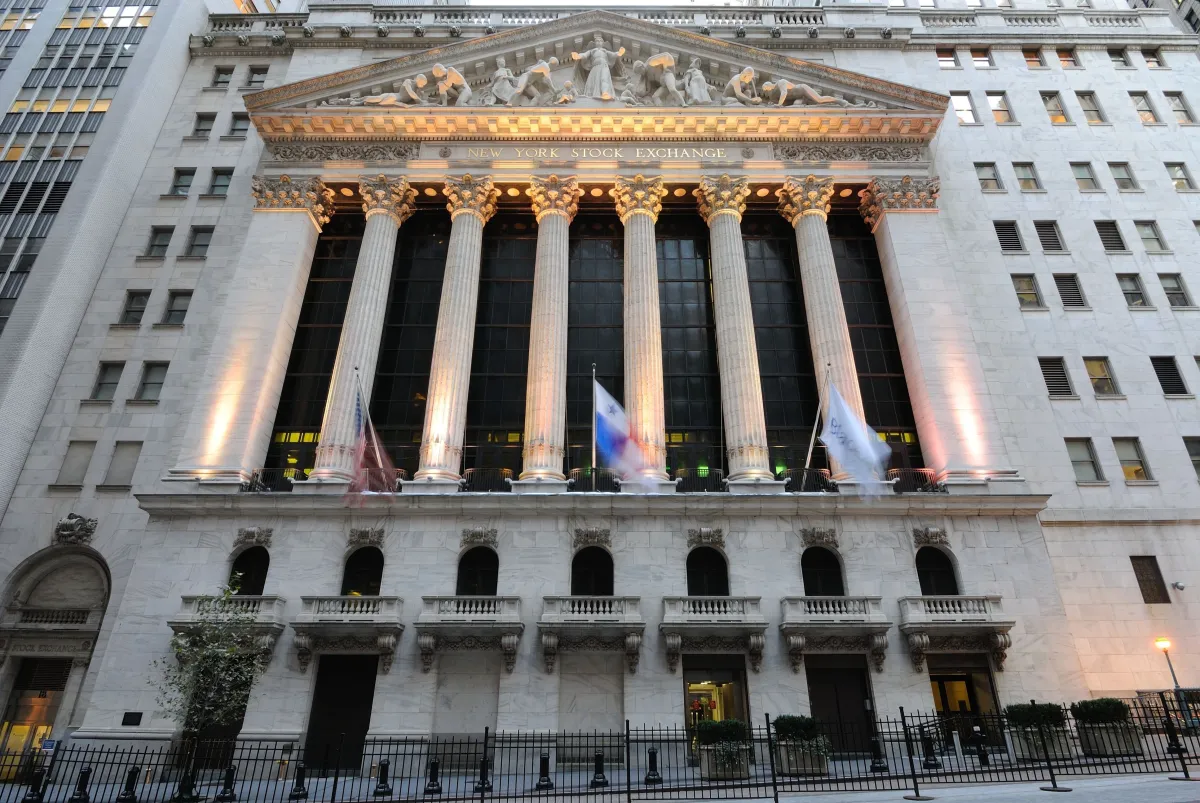 Photo: New York Stock Exchange, via i.pinimg.com
This is the same argument that zero-commission trading platforms made when they launched in the 2010s. The language was updated — "democratizing finance," "leveling the playing field," "giving everyone access to the same tools as Wall Street" — but the underlying claim was structurally identical. The existing system is exclusionary. We are the remedy.
What the democratization argument consistently obscures, in both eras, is the question of what is actually being democratized. The bucket shop democratized access to speculation. It did not democratize access to information, to structural advantage, or to the kind of capital cushion that allows a losing position to be held until it recovers. The retail trading platforms of the 21st century democratized commission-free execution. They did not democratize the algorithmic trading infrastructure, the payment-for-order-flow arrangements, or the behavioral data that professional market participants use to anticipate retail order flow.
Access to the game is not the same as a fair game. This distinction was as available to a Chicago alderman in 1889 as it is to a financial regulator in 2024. It has consistently proven less compelling than the image of the ordinary person finally getting a seat at the table.
The Mechanics of Sustained Loss
Bucket shop operators understood, with an intuitive precision that preceded the formal vocabulary of behavioral economics by a century, that the challenge was not getting a customer to make the first trade. The challenge was keeping the customer trading after the first loss.
Several mechanisms addressed this problem. The first was the near-win structure: price movements in bucket shops were frequently managed so that a customer's position came close to paying off before reversing. The psychological experience of a near-win activates the same reward circuitry as an actual win, producing a motivation to continue that is, in some respects, stronger than the motivation produced by success. This is the same principle that governs slot machine design, and it is not an accident that both industries discovered it independently.
The second mechanism was social. Bucket shops were public spaces. Customers watched each other trade, celebrated each other's wins, and absorbed each other's confidence. The social environment normalized continued participation and made individual withdrawal feel like a defection from a community rather than a rational financial decision. The leaderboard features of contemporary trading applications perform an identical function in a digital environment.
The third mechanism was the small stake. By allowing trades with minimal capital, bucket shops ensured that early losses were not large enough to trigger the kind of serious financial review that might lead a customer to stop. The first losses were tuition. They bought familiarity, habit, and the sunk-cost psychology of someone who has already invested time and identity in becoming "a trader."
The Regulatory Response and Its Limits
By the early 1900s, a coalition of state attorneys general, financial exchanges, and reform-minded legislators had begun systematically closing bucket shops. The legal arguments were varied — fraud, gambling, interference with legitimate commerce — but the practical effect was a two-decade campaign that largely succeeded in eliminating the storefront version of the operation by the 1920s.
What the regulatory campaign did not eliminate was the psychological infrastructure the bucket shops had built. The customer who had learned to experience market speculation as entertainment, as identity, as social participation — that customer did not disappear when the bucket shop closed. That customer found the next available venue.
The history of retail financial speculation in America is, in this sense, not a history of successive industries but a history of a persistent psychological appetite finding successive containers. The bucket shop. The boiler room. The penny stock era. The day trading boom of the late 1990s. The commission-free app with the confetti animation when a trade executes.
The appetite is not manufactured by any of these systems. It is recruited. Human beings have always been willing to accept unfavorable odds in exchange for the emotional experience of participation in something that feels like it could change their circumstances. The bucket shop operators did not create this willingness. They were simply the first to build a scalable commercial infrastructure around it.
The SEC exists. The bucket shops do not. The psychology that made them profitable is in excellent health.