The Editor's Throne: How 19th-Century Newspaper Gatekeepers Perfected the Art of Controlling Public Conversation

The Editor's Throne: How 19th-Century Newspaper Gatekeepers Perfected the Art of Controlling Public Conversation
In 1871, James Gordon Bennett Jr., editor of the New York Herald, received 847 letters responding to his paper's coverage of the Chicago Fire. He published 23. Of those, 19 supported positions the Herald had already taken editorially. The four dissenting letters appeared with lengthy editorial rebuttals that often ran longer than the original correspondence.
 Photo: Chicago Fire, via static1.moviewebimages.com
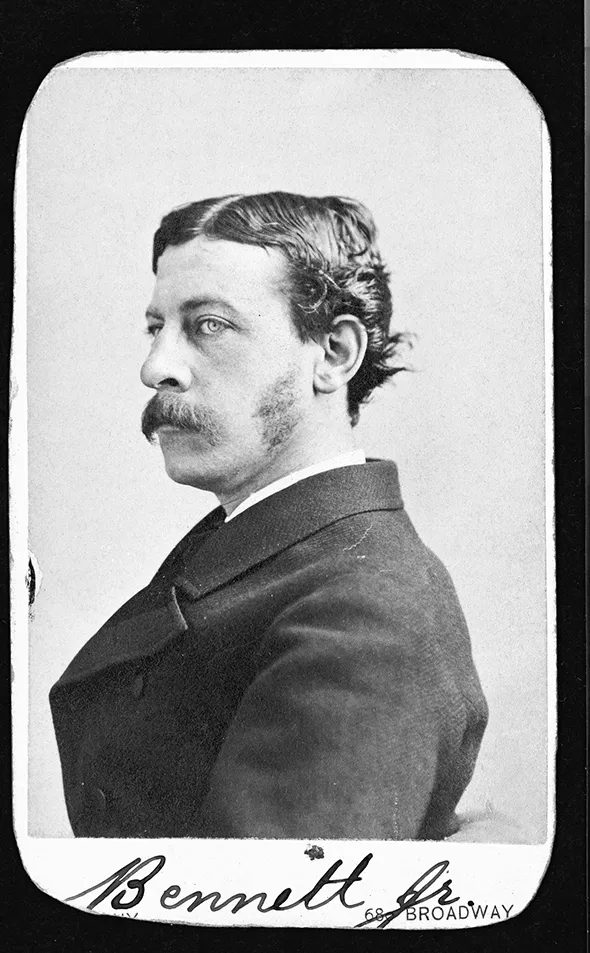 Photo: James Gordon Bennett Jr., via www.slate.com
Bennett wasn't unusual. He was typical. For most of the 19th century, newspaper editors exercised a level of control over public discourse that would make Mark Zuckerberg blush. They decided which voices got heard, in what order, and with what framing. They were the original content moderators, and their choices shaped American political conversation with a precision that modern algorithms can only approximate.
The Letters Section: Democracy's Bottleneck
The letters to the editor section emerged in American newspapers during the 1830s as a response to increasing literacy and political engagement. What started as a democratic innovation quickly became the most manipulated space in journalism.
Editors didn't just choose which letters to publish—they edited them for length, clarity, and political palatability. They rearranged paragraphs, combined multiple letters into single entries, and routinely published responses under pseudonyms to protect controversial writers or, more often, to hide the fact that the "response" was written by the editorial staff itself.
The Boston Globe's editorial guidelines from 1885 explicitly stated that letters should "advance the conversation in directions that serve the public interest," a phrase so vague it justified nearly any editorial interference. The "public interest," unsurprisingly, aligned closely with the paper's political and commercial interests.
Manufacturing Consensus Through Selection Bias
Editors quickly discovered that they could create the appearance of public consensus by carefully curating which letters appeared. During the 1876 presidential election, the Philadelphia Inquirer published letters supporting Republican candidate Rutherford Hayes at a 4:1 ratio, despite receiving roughly equal numbers of letters supporting both candidates.
When challenged on this disparity, editor William Penn Nixon explained that pro-Hayes letters were "more thoughtfully written" and "better represented the educated opinion of our readership." This reasoning—elevating certain voices as more worthy of amplification—became standard practice across American journalism.
Modern social media platforms employ remarkably similar logic when they boost "quality content" or suppress "low-engagement posts." The criteria have become more sophisticated, but the fundamental editorial judgment remains: some voices deserve more reach than others.
The Echo Chamber Architecture
Nineteenth-century editors perfected techniques for creating ideological echo chambers that Silicon Valley is still learning to replicate. They didn't just publish agreeable letters—they strategically sequenced them to create the impression of building momentum around particular ideas.
A typical sequence might begin with a letter raising concerns about a local issue, followed by several letters offering different perspectives on solutions, culminating in a letter that happened to endorse the position the newspaper had advocated editorially. Readers experienced this as organic community dialogue, but it was carefully orchestrated theater.
The Chicago Tribune's coverage of labor disputes in the 1880s provides a master class in this technique. Editor Joseph Medill would publish a series of letters from "concerned citizens" expressing fear about worker organizing, followed by letters from "local businessmen" calling for stronger law enforcement, building to letters from "community leaders" demanding specific policy changes that aligned with the Tribune's pro-business editorial stance.
Editorial Responses: The Original Fact-Checking
Editors wielded their ultimate power through editorial responses—commentary appended to published letters that could clarify, contextualize, or completely undermine the writer's point. These responses appeared in brackets or italics, giving them the visual authority of institutional judgment.
A letter criticizing municipal corruption might appear with an editorial note: "[The writer's claims about City Hall have been investigated by this newspaper and found to lack substantiation.]" A letter supporting women's suffrage might be followed by: "[Our correspondent's enthusiasm is admirable, though her understanding of constitutional law appears limited.]"
These editorial responses functioned exactly like modern fact-checking labels or content warnings. They didn't prevent publication, but they guided reader interpretation in ways that often negated the original message.
The Pseudonym Game: Manufacturing Grassroots Opinion
Editors routinely published letters under pseudonyms, ostensibly to protect writers from social or professional retaliation. In practice, this anonymity became a tool for manipulation. Editors could publish multiple letters from the same person under different names, creating false impressions of widespread support for particular positions.
More problematically, editors began writing letters themselves and publishing them under pseudonyms. The New York Sun was notorious for this practice during the 1890s, with editor Charles Dana admitting years later that roughly half the letters published during his tenure were written by staff members.
This practice—creating fake grassroots support for editorial positions—established patterns that persist in modern astroturfing campaigns and bot networks. The technology has evolved, but the strategy of manufacturing artificial consensus remains unchanged.
Regional Power and National Influence
Large newspapers in major cities didn't just control local conversation—they influenced national discourse by reprinting letters from each other's pages. A letter published in the New York Times might appear the following week in newspapers across the country, often without attribution to its original source.
This reprinting network meant that a small group of editors in major cities could effectively set the terms of national debate. A coordinated effort to promote particular letters across multiple newspapers could create the impression of nationwide grassroots support for specific policies or candidates.
Modern media still operates on similar principles. A story trending on Twitter influences cable news coverage, which shapes newspaper editorial decisions, which affects local news priorities. The mechanisms have become more complex, but the fundamental dynamic—centralized editorial decisions creating distributed influence—remains intact.
The Illusion of Democratic Participation
The genius of 19th-century letters sections was that they provided the appearance of democratic participation while maintaining strict editorial control. Readers felt heard because their letters might be published. They felt part of a community conversation because they could respond to other published letters. But the entire framework was managed by editors who determined the boundaries of acceptable discourse.
This created what historians call "managed democracy"—the psychological benefits of participation without the actual power to influence outcomes. Readers could voice opinions, but only within parameters set by editorial judgment.
Modern platforms provide similar illusions. You can post anything on Facebook, but algorithmic curation determines who sees it. You can tweet any opinion, but engagement metrics decide its reach. You can comment on any YouTube video, but moderation systems filter what appears.
The Eternal Editorial Problem
The debates we're having about platform neutrality, algorithmic bias, and content moderation aren't new problems created by digital technology. They're ancient editorial problems wearing modern interfaces.
Nineteenth-century newspaper editors grappled with the same fundamental questions that plague social media platforms today: Who gets to speak? What constitutes acceptable discourse? How do you balance free expression with community standards? When does curation become censorship?
Their solutions—selective publication, strategic sequencing, editorial rebuttal, pseudonymous manipulation—established templates that persist across every communication medium since. The tools have become more sophisticated, but the editorial impulses remain unchanged.
The next time you wonder why your Facebook post didn't get traction, or why certain stories trend while others disappear, remember James Gordon Bennett Jr. sorting through those 847 letters about the Chicago Fire. He faced the same choices that every content moderator faces: whose voice deserves amplification, and who gets to decide.
The technology changes. The editorial throne endures.