Built to Bring You Back: The Department Store as America's First Addiction Engine
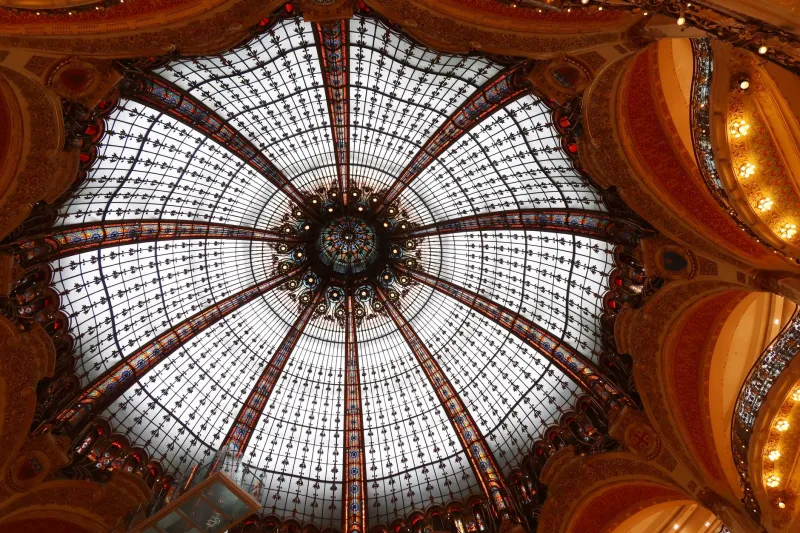
There is a persistent myth in technology circles that behavioral manipulation at scale is a modern invention—that the architects of app engagement, the designers of infinite scroll, and the engineers of the push notification discovered something genuinely new about the human mind. They did not. The discovery had already been made, in considerable detail, by the men who built Wanamaker's in Philadelphia, Marshall Field's in Chicago, and Macy's in New York.
The department store was not merely a retail innovation. It was, in the fullest sense of the term, a behavioral system—one designed with remarkable precision to override rational decision-making, manufacture emotional dependency, and ensure that customers returned not because they needed to, but because some part of their psychology had been quietly restructured to demand it.
The Architecture of Compulsion
When John Wanamaker opened his Grand Depot in 1876, he was not simply offering goods under one roof. He was building an environment calibrated to produce a specific psychological state. The soaring atria, the abundant natural light, the deliberate placement of perfume and cosmetics near the entrance—these were not aesthetic choices. They were functional ones.
Scent, researchers would confirm a century later, bypasses the rational prefrontal cortex and activates the limbic system directly. Wanamaker's buyers didn't know the neuroscience, but they knew the result: a customer who entered through a cloud of pleasant fragrance was a customer in a different emotional register than one who walked in off a cold street. The transition was engineered.
The layout compounded the effect. Necessities—hosiery, thread, practical woolens—were positioned at the back of the floor, requiring customers to traverse the entire store to reach them. Along the way, they passed luxury goods, seasonal displays, and items they had not known they wanted until the moment they saw them. This is what modern UX designers call a "discovery loop." Wanamaker's called it good merchandising. The underlying mechanism was identical.
Urgency as a Product
The limited-time sale was not invented by an e-commerce startup sending countdown-timer emails at midnight. It was invented, in its mature commercial form, by department store operators who understood that scarcity—real or manufactured—is among the most powerful motivators available to a retailer.
Marshall Field's seasonal clearance events in the 1880s and 1890s drew crowds that required police management. The mechanism was straightforward: prices were reduced, but only for a defined period, and inventory was genuinely finite. What made these events psychologically potent was not the discount itself but the fear of exclusion. To miss the sale was to lose something, and the human mind, as any behavioral economist will confirm, weights losses far more heavily than equivalent gains.
This is loss aversion. It is not a quirk of modern consumer culture. It is a feature of human cognition that predates commerce entirely, and the department stores of the Gilded Age had mapped it empirically—through observation of customer behavior—decades before Daniel Kahneman would name it in a laboratory.
Today's flash sales, limited-quantity drops, and "only 3 left in stock" notifications are the direct heirs of Marshall Field's clearance floor. The psychological trigger is unchanged. The delivery is merely faster.
The Loyalty Mechanism
Perhaps the most sophisticated element of the department store's behavioral architecture was its approach to repeat visitation. The goal was not simply to sell a coat. It was to make the store itself a destination—a place customers returned to habitually, in the absence of any specific need, because the act of returning had become rewarding in its own right.
Wanamaker's accomplished this through a combination of amenities that had no direct commercial function: reading rooms, art galleries, public concerts, and restaurants. These features cost money to maintain and generated no direct revenue. Their purpose was to associate the store with positive emotional experiences that extended beyond the transaction. A customer who had lunch at Wanamaker's, browsed an art exhibition, and listened to the in-house organ was a customer who had spent two hours in an environment designed to make her feel good. The store had become, in some functional sense, a social institution.
This is precisely what app designers mean when they speak of "non-transactional engagement." The Instagram user who opens the app to look at friends' photographs, not to make a purchase, is nonetheless building a habitual relationship with the platform that will eventually be monetized. Wanamaker understood this logic in 1876. He simply lacked the vocabulary to describe it in terms a venture capitalist would recognize.
What the Experiment Proved
The department store era matters not as a quaint precursor to modern retail but as a controlled historical experiment in human behavioral malleability. These operators had no neuroscience, no A/B testing infrastructure, no user data beyond what they could observe directly. What they had was close attention to human behavior over time, and what they discovered was that the mechanisms of compulsion are remarkably consistent.
Scarcity produces urgency. Sensory pleasure lowers rational resistance. Social belonging motivates return visits. Habitual behavior, once established, is extraordinarily difficult to interrupt.
Silicon Valley spent the 2010s rediscovering each of these findings, at enormous expense, and presenting them as insights. They are not insights. They are the operating manual of the American department store, written in the language of the 19th century and translated, without essential revision, into the language of the algorithm.
History did not merely anticipate the engagement economy. In the most meaningful sense, it invented it.