Cicero Saw It Coming: How Rome's Fake News Epidemic Mirrors Our Own
Cicero Saw It Coming: How Rome's Fake News Epidemic Mirrors Our Own
There is a temptation, when studying the fall of the Roman Republic, to locate the cause in the grand and the dramatic — in Caesar crossing the Rubicon, in the daggers on the Ides of March, in the legions massing at the borders of a city that had never imagined needing walls from within. This is the wrong place to look. By the time the swords came out, the Republic had already been hollowed out by something quieter and considerably more familiar: a decades-long war over what was real.
The weapons were forged letters, strategic rumors, and the deliberate, systematic exploitation of the same cognitive vulnerabilities that a Silicon Valley product team would recognize immediately.
The Original Information Warfare Playbook
The late Republic was, by ancient standards, a high-information society. Rome had the acta diurna — a form of daily gazette posted in public spaces — along with an extensive culture of letter-writing among the elite, public speeches in the Forum, and a population that was, relative to its era, remarkably literate. Information moved. Which meant disinformation could move too.
Political operatives of the period understood this with a sophistication that should make us uncomfortable. Cicero's own letters document, in real time, the experience of watching deliberate falsehoods propagate through Roman society faster than corrections could follow. He writes of rumors that seemed to materialize from nowhere, gain credibility through repetition, and become impossible to dislodge even after their origins were exposed. He is describing, with the precision of a man living through it, what behavioral scientists now call the illusory truth effect: the well-documented tendency for repeated exposure to a claim to increase its perceived credibility, independent of whether the claim is accurate.
Rome's demagogues understood this intuitively. Clodius Pulcher — the populist tribune who spent years as Cicero's most effective political tormentor — ran what can only be described as a coordinated narrative operation. He maintained street gangs that functioned partly as muscle and partly as a distribution network for political messaging. He used the rostra not merely to argue but to perform, recognizing that emotional spectacle was more persuasive than reasoned argument. He forged or selectively leaked correspondence to damage opponents. He was, in the vocabulary of our moment, extremely online.
The Educated Were Not Protected
Here is the part that ought to land hardest for contemporary readers: the Romans who believed themselves too sophisticated for manipulation were consistently the most susceptible to it.
This is not an accident, and it is not unique to Rome. Psychological research on motivated reasoning — the tendency to evaluate evidence not for its accuracy but for its compatibility with conclusions we already prefer — consistently shows that higher intelligence and more education tend to make people better at constructing justifications for beliefs they arrived at through non-rational means. The Roman senatorial class, steeped in rhetoric and philosophy, were expert rationalizers. They could construct elaborate, internally coherent arguments for positions they had adopted for entirely emotional or tribal reasons.
Cicero himself, one of the most brilliant analytical minds of his century, was not immune. His Philippics against Mark Antony — the speeches that would eventually cost him his life — are masterworks of rhetoric deployed in service of a political judgment that was, at minimum, catastrophically miscalculated. He genuinely believed the institutions he was defending could hold. He was wrong, and the sophistication of his arguments did not protect him from being wrong.
Plutarch, writing later, observed the same pattern across multiple political figures of the period: the more confident a Roman politician was in his ability to see through propaganda, the more thoroughly he tended to be captured by it.
Platform Mechanics, Ancient Edition
Modern social media platforms are frequently criticized — correctly — for having built engagement algorithms that systematically amplify outrage, novelty, and tribal affirmation over accuracy. This is a genuine and serious design problem. It is also not a new problem; it is a new implementation of a very old problem.
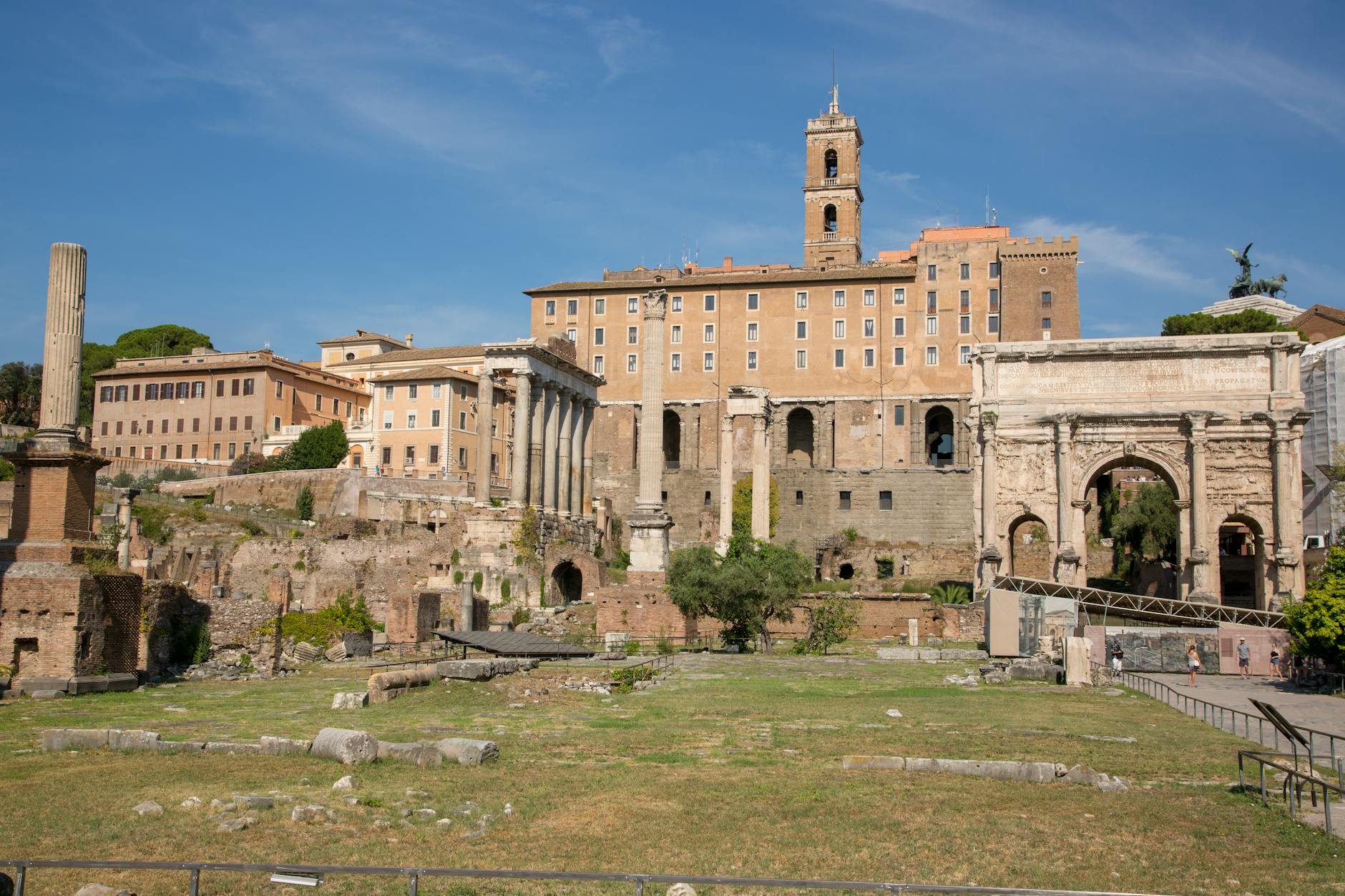
The Roman Forum was, in its own way, an engagement-optimized platform. The speakers who drew crowds were not the ones making careful, hedged arguments about complex policy tradeoffs. They were the ones who gave the crowd a villain, a grievance, and a simple story. The contiones — informal public assemblies — functioned as a kind of viral amplification system. A compelling speech could be repeated, paraphrased, and distributed across the city within hours, stripped of its context and sharpened into something more emotionally potent than the original.
The difference between that system and Twitter is one of speed and scale, not of underlying psychology. The human appetite for a clean narrative, a clear enemy, and the warm solidarity of shared outrage has not changed in two thousand years because it is not a cultural artifact. It is an operating feature of the species.
Rome Didn't Solve It
The uncomfortable conclusion that the historical record forces upon us is this: Rome did not find a solution to its information crisis. The Republic did not develop new civic norms robust enough to contain the damage. It did not produce an institution capable of establishing shared epistemic ground. It produced Augustus — a ruler who resolved the chaos of competing narratives by monopolizing the production of narrative entirely.
This is not a prediction. It is a data point. History does not repeat with the mechanical precision of a physical law, and the United States in the twenty-first century is not the Roman Republic in the first century BC. The structural differences are real and meaningful.
But the psychological profile of the citizens living through both moments is identical, because it is the same psychology. The Roman who shared a damaging rumor about a political opponent without verifying it, who felt a warm rush of vindication when the story confirmed what he already believed, who dismissed corrections as themselves politically motivated — that person is not a historical curiosity. He is your neighbor. He might be you.
Cicero spent the last years of his life writing and speaking in defense of a Republic that was already gone. He knew, at some level, that the information environment had been so thoroughly corrupted that the institutions depending on shared civic reality could not survive. He kept writing anyway.
There is something both admirable and cautionary in that. The admirable part is obvious. The cautionary part is that being right about the diagnosis, and eloquent about the stakes, and absolutely committed to the cause — none of it was sufficient. The Republic fell anyway, and the man who understood it best lost his head.
History is under no obligation to reward accurate analysis with good outcomes. That, too, is a data point worth keeping.