Reading Between the Battle Lines: How Carnegie's Libraries Became America's First Content Moderation War

The Philanthropist Who Accidentally Started a Culture War
Between 1883 and 1929, Andrew Carnegie funded the construction of over 2,500 public libraries across America, believing that free access to books would naturally elevate democratic society. What he didn't anticipate was that putting books on public shelves would immediately transform every small town into a battlefield over whose version of American values deserved institutional endorsement. The Carnegie library program didn't just democratize access to information—it democratized the fight over what information was worth accessing.
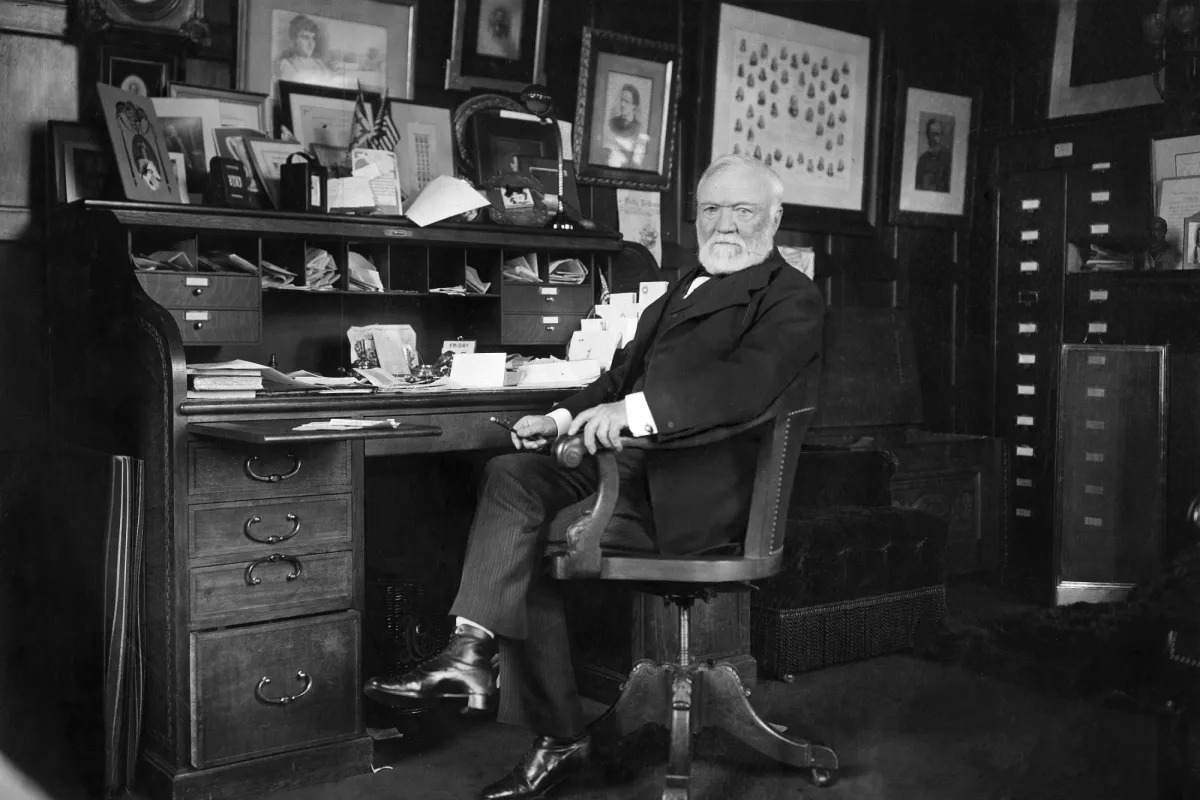 Photo: Andrew Carnegie, via exploringcapitalism.com
These weren't polite disagreements about literary merit. They were ferocious, community-splitting wars over fundamental questions that sound eerily familiar today: Who decides what ideas deserve a platform? How do you balance majority preferences against minority rights? What's the difference between curation and censorship? The psychological dynamics that drove these 19th-century library battles are identical to those fueling contemporary debates over social media content moderation and school book bans.
Every Bookshelf Is a Political Statement
Carnegie's libraries came with strings attached. Recipients had to agree to provide ongoing operational funding and follow basic organizational principles, but the steel magnate deliberately avoided dictating specific book selection policies. He assumed that local communities would naturally gravitate toward educational and uplifting materials. Instead, this vacuum of authority immediately became contested territory.
Temperance groups demanded that libraries refuse to stock books that portrayed alcohol consumption in positive terms. Religious leaders insisted that works questioning Christian doctrine be excluded from public collections. Labor organizers fought to ensure that pro-union materials received equal shelf space with management perspectives on industrial disputes. Recent immigrants pushed for books in their native languages, while established residents argued that public funds should only support English-language materials.
Each faction treated the library's collection as a referendum on their community standing. Having your preferred books prominently displayed signaled social legitimacy; seeing them relegated to back shelves or excluded entirely felt like civic disenfranchisement. The modern fights over which books belong in school libraries follow exactly the same psychological pattern—they're not really about literature but about whose values get institutionally validated.
The Librarian as Content Moderator
Carnegie's libraries created a new professional class: the public librarian, whose job required making daily decisions about which books deserved shelf space and which requests from community members deserved serious consideration. These women—and they were overwhelmingly women—found themselves in an impossible position, simultaneously expected to remain politically neutral while making inherently political choices about information access.
Librarians developed sophisticated strategies for managing community pressure that mirror the approaches modern platform companies use for content moderation. They created formal acquisition policies that appeared objective while preserving administrative discretion. They established patron request systems that gave community members a voice in collection development while maintaining professional control over final decisions. They pioneered the art of strategic ambiguity—appearing responsive to all constituencies while satisfying none completely.
The psychological burden was identical to what contemporary content moderators experience: constant pressure to make split-second decisions about complex cultural and political questions, with every choice guaranteed to anger someone and no clear authority to appeal to when conflicts escalated.
When Democracy Meets Information
The most revealing aspect of the Carnegie library wars was how they exposed the fundamental tension between democratic governance and information curation. In theory, publicly funded institutions should reflect majority preferences. In practice, majority preferences often involved suppressing materials that minority groups considered essential to their civic participation.
Immigrant communities wanted books that helped them navigate American legal and social systems. African American residents in segregated towns fought for materials that acknowledged their history and contributions. Women's rights activists demanded access to literature about suffrage and reproductive health. In each case, the majority community viewed these requests not as legitimate educational needs but as political provocations that threatened established social hierarchies.
The same dynamic drives contemporary content moderation debates. Every platform policy that restricts certain types of speech gets criticized as censorship by those whose content is affected, while every policy that allows controversial material gets attacked as irresponsible by those who disagree with it. The underlying psychological conflict—between democratic accountability and informational diversity—remains unresolved because it's fundamentally unresolvable.
The Economics of Outrage
Carnegie library battles revealed something crucial about how communities process disagreement: controversy generates engagement in ways that consensus never does. Local newspapers discovered that reporting on library book disputes sold more copies than covering city council budget meetings. Politicians learned that taking strong positions on library policies mobilized voters more effectively than discussing infrastructure spending.
This created perverse incentives that made compromise increasingly difficult. Community leaders who might have preferred quiet negotiation found themselves pressured to take public stands that hardened factional divisions. Moderate positions became politically untenable when constituents demanded clear loyalty tests. The result was escalating polarization over issues that could have been resolved through private discussion.
Modern social media platforms face identical dynamics. Algorithmic systems that prioritize engagement naturally amplify controversial content because controversy generates the clicks, shares, and comments that platform business models depend on. The technology changes, but the underlying human psychology—our greater attention to conflict than consensus—remains constant.
The Permanent Revolution of Information Access
Perhaps the most important lesson from Carnegie's library experiment is that information access will always be contested territory. Every generation believes its particular fights over books, media, or digital content represent unprecedented threats to social stability, but the historical record reveals a different pattern: communities have been arguing about information control for as long as information has been publicly accessible.
The specific books change—yesterday's controversies over Darwin and Marx become today's debates over gender identity and critical race theory—but the psychological framework remains identical. Established groups use information policy to maintain social dominance. Emerging groups use information access to challenge existing hierarchies. The resulting conflicts feel existential to participants because they represent genuine struggles over political and cultural power.
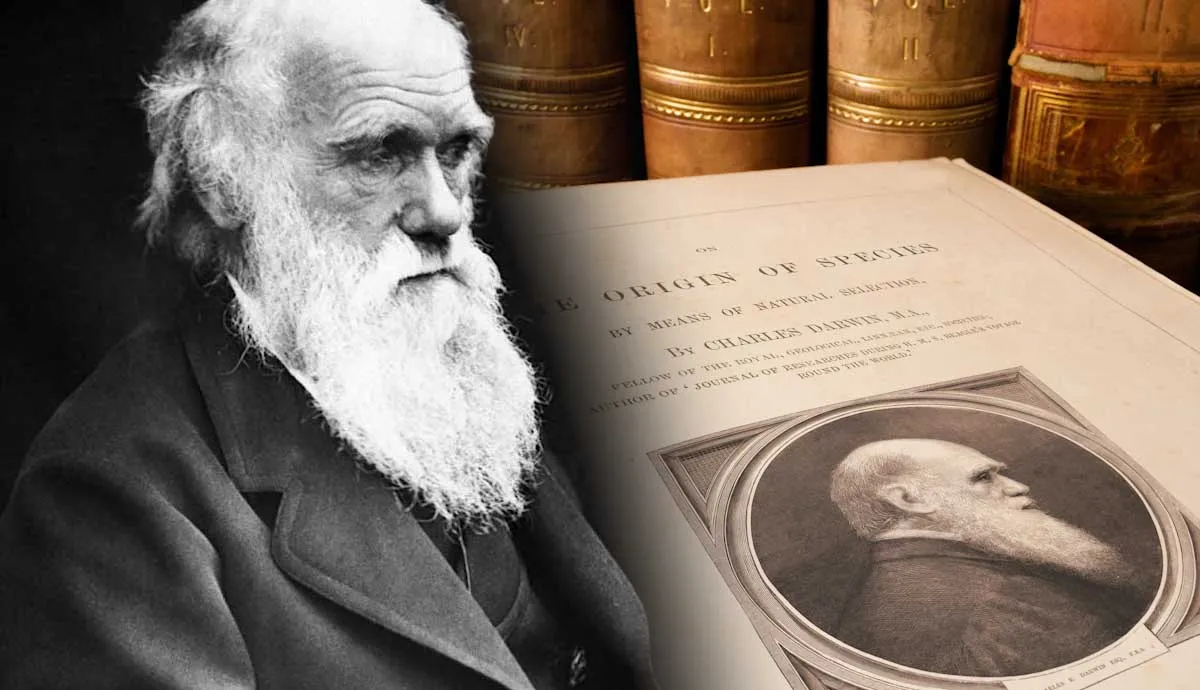 Photo: Darwin, via cdn.thecollector.com
Carnegie believed that universal access to books would create more informed democratic citizens. What he actually created was a permanent mechanism for communities to argue about whose version of informed citizenship deserved institutional support. The libraries succeeded, but not in the way he intended. Instead of ending cultural conflicts, they provided a new venue for fighting them.
The Algorithm Was Always Human
The most striking similarity between 19th-century library battles and contemporary content moderation disputes is how both reveal the impossibility of neutral curation. Every choice about what to include or exclude reflects somebody's values about what information matters and whose perspectives deserve attention. The fantasy that algorithmic systems can solve these problems by removing human bias ignores the reality that human bias is built into every system humans create.
Carnegie's librarians faced the same challenge that platform engineers face today: how to create scalable systems for managing information access that feel fair to diverse constituencies with incompatible preferences. The solutions they developed—formal policies, appeal processes, transparency reports, community input mechanisms—are essentially identical to the approaches modern tech companies use, just implemented with card catalogs instead of machine learning.
The psychological appeal of technological solutions is that they promise to replace messy human judgment with objective algorithmic decision-making. But the Carnegie library experience demonstrates that information curation is irreducibly political. Someone has to decide what the algorithm optimizes for, and those decisions inevitably reflect particular values about what kind of information ecosystem serves the public interest.
Four generations later, we're still fighting the same battles Carnegie accidentally started. The only difference is that our libraries are digital, and the stakes feel higher because the scale is global. But the fundamental human psychology driving these conflicts—our need to control information as a way of controlling social reality—hasn't evolved at all.