When Speculation Became Storytelling: How Amsterdam's Merchants Created the Modern Investor Pitch

The World's First Unicorn Was a Shipping Company
In 1602, a group of Dutch merchants accomplished something that would have been impossible just decades earlier: they convinced thousands of strangers to hand over their money in exchange for pieces of paper representing partial ownership in ventures they would never see, managed by people they would never meet, in places they could not pronounce. The Verenigde Oostindische Compagnie—the Dutch East India Company—became the world's first publicly traded corporation, and in the process, its founders accidentally invented the entire psychological infrastructure of modern venture capital.
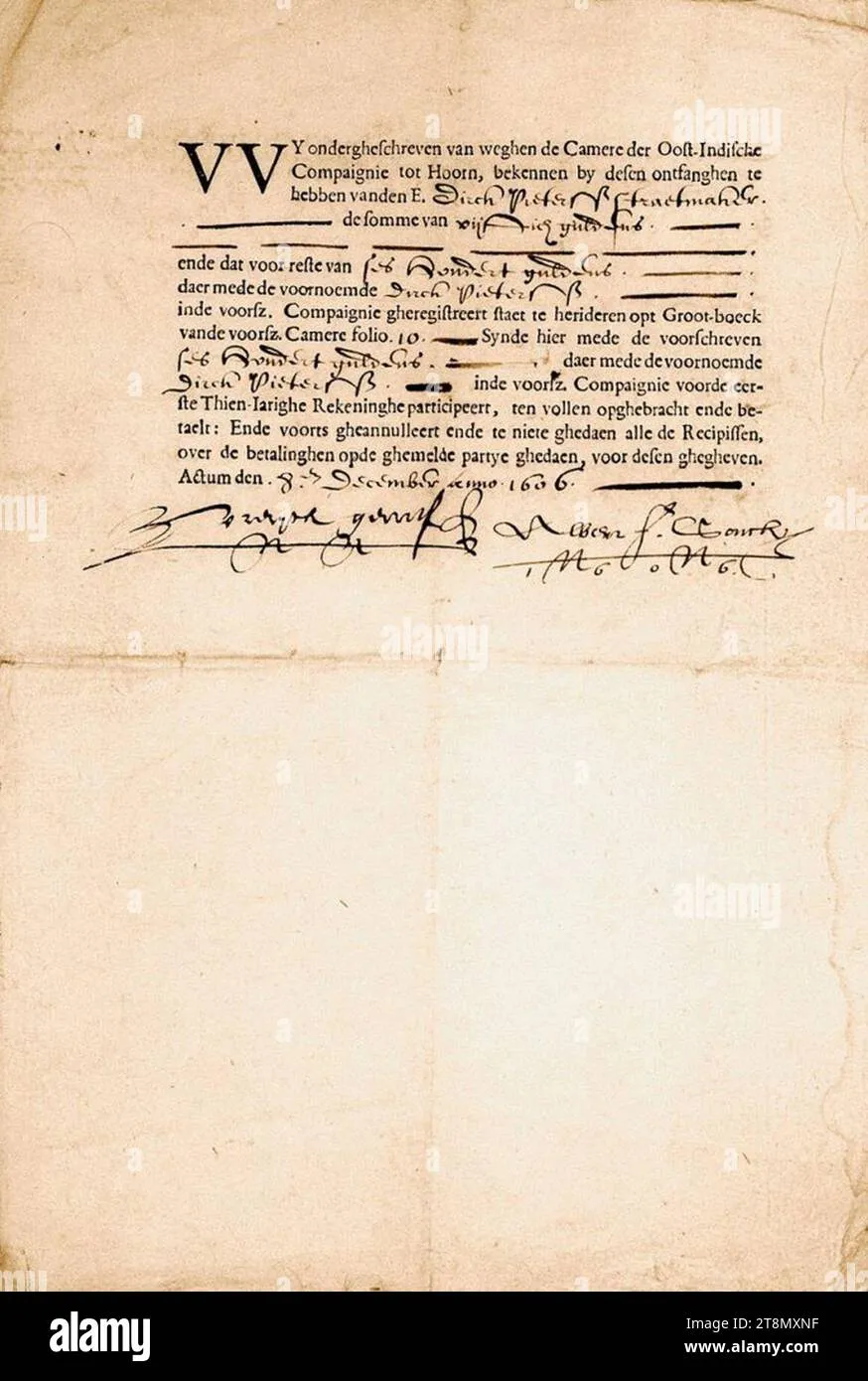 Photo: Verenigde Oostindische Compagnie, via c8.alamy.com
The VOC's innovation wasn't just financial; it was narrative. These merchants understood that selling shares in a company required selling a story about the future that was compelling enough to override present-day skepticism. They needed to make the unknown feel inevitable and the risky feel prudent. Four hundred years later, every startup pitch deck still follows the same psychological blueprint they created.
The Addressable Market Has Always Been Infinite
When VOC executives presented their case to potential investors, they didn't lead with shipping manifests or profit margins. They led with the size of the opportunity: all of Asia, all of its spices, all of its silk, all of its porcelain, waiting to be claimed by whoever was bold enough to sail around Africa. The entire continent became their total addressable market, and the pitch was simple—this wasn't just an investment in a few ships, but a stake in controlling global trade forever.
Modern founders use identical language when they describe their startups as capturing "the $500 billion healthcare market" or "disrupting the $2 trillion retail industry." The psychological appeal is the same: transform a specific business selling specific products into a vehicle for capturing an entire category of human activity. The VOC's investors weren't buying shares in a shipping company; they were buying shares in the concept of European dominance over Asian commerce.
When Failure Became "Learning"
The VOC's most lasting contribution to business culture wasn't its profits—which were substantial—but its approach to managing investor expectations through catastrophe. Ships sank. Entire expeditions vanished. Wars erupted. Monsoons destroyed warehouses full of goods. Local rulers changed their minds about trade agreements. Pirates captured valuable cargo.
Instead of treating these disasters as failures, VOC management pioneered the art of reframing setbacks as strategic intelligence. A shipwreck became valuable data about navigation routes. A failed negotiation with local merchants became crucial market research. A warehouse fire became an opportunity to rebuild with better infrastructure. Every quarterly report to shareholders positioned losses as tuition payments in the university of global commerce.
This is the exact psychological framework that modern startup culture calls "failing fast" and "iterating based on learnings." The language has evolved, but the underlying promise remains identical: failure isn't really failure if it generates information that improves future performance. The VOC's investors weren't losing money; they were funding an expensive education in how to dominate international trade.
The Visionary Founder Myth Was Born in Amsterdam
The VOC's leadership cultivated something that hadn't existed before in business: the cult of the visionary founder. Men like Jan Pieterszoon Coen weren't just presented as competent managers but as singular geniuses whose understanding of global markets transcended ordinary commercial thinking. They were portrayed as individuals whose vision was so far ahead of contemporary understanding that short-term setbacks were irrelevant compared to their long-term strategic brilliance.
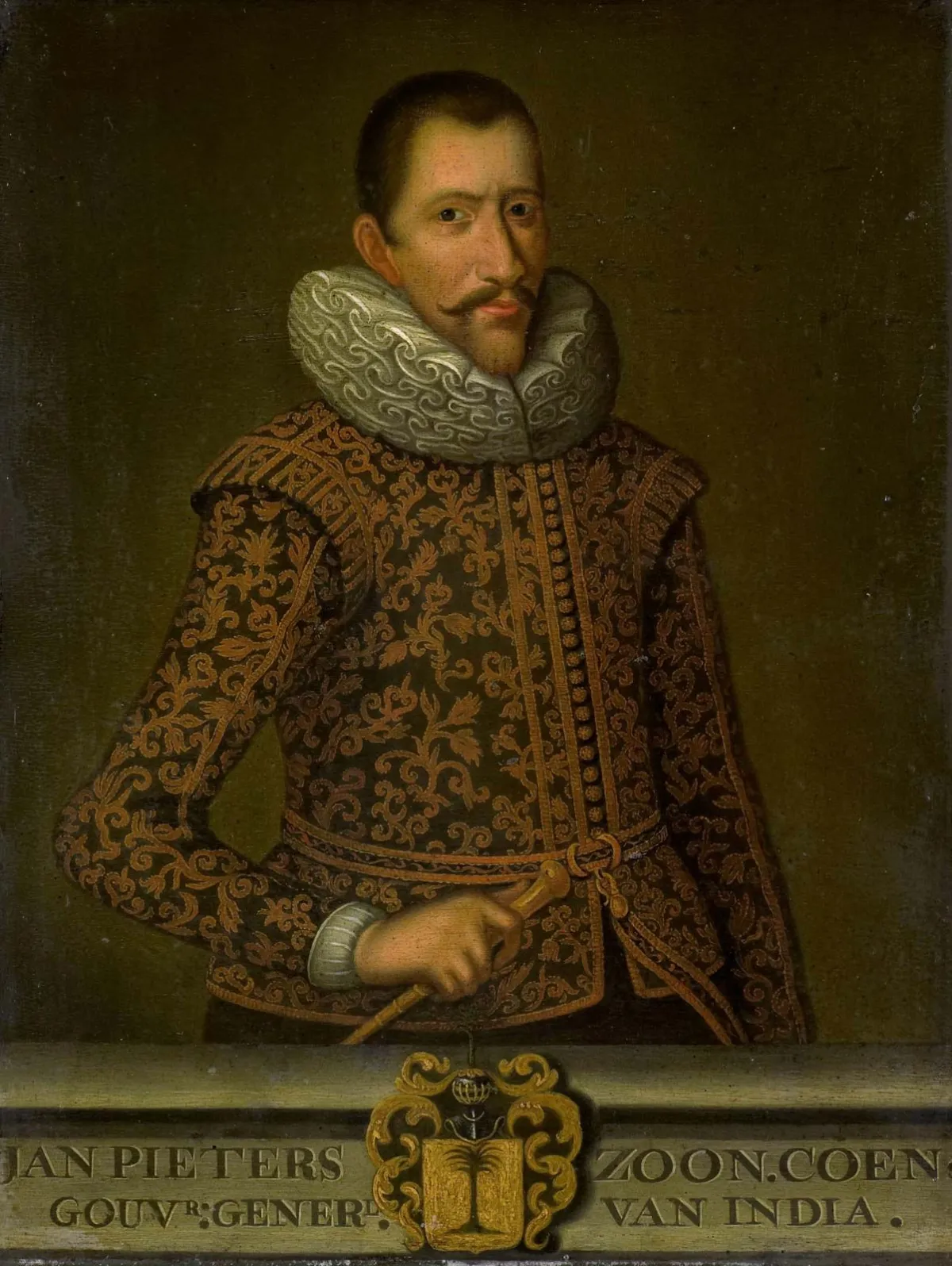 Photo: Jan Pieterszoon Coen, via cdn.britannica.com
This narrative served a crucial psychological function: it gave investors a human figure to attach their faith to when the numbers didn't make sense. When ships failed to return on schedule or profits fell short of projections, shareholders weren't losing confidence in a business model—they were temporarily doubting a visionary whose track record would ultimately vindicate their faith.
Every modern founder who positions themselves as uniquely capable of seeing around corners that confuse their competitors is channeling this same psychological dynamic. The promise isn't just superior execution; it's superior perception. The VOC's investors weren't just funding better ships; they were funding better captains whose judgment would prove superior to everyone else's over time.
The Quarterly Report as Narrative Engineering
Perhaps the VOC's most sophisticated innovation was the quarterly report designed to obscure as much as it revealed. These documents were masterpieces of selective transparency—detailed enough to demonstrate serious operational management, vague enough to prevent competitors from understanding actual performance, and optimistic enough to maintain investor confidence through inevitable periods of poor results.
VOC reports focused heavily on inputs rather than outputs: how many ships had been commissioned, how many new trade routes were being explored, how many warehouses were under construction. The implicit message was that current profits mattered less than the infrastructure being built for future domination. Investors weren't just funding this quarter's trading expedition; they were funding the construction of a permanent commercial empire.
Modern earnings calls follow an identical template. Management teams spend most of their time discussing user acquisition costs, total addressable markets, product development timelines, and strategic partnerships rather than simple profitability metrics. The psychological appeal is the same: redirect attention from present-day financial performance toward future potential that justifies current investment.
The Appetite for Exponential Futures
The VOC succeeded because it understood something fundamental about human psychology that hasn't changed in four centuries: people will pay premium prices for stories about exponential futures, even when linear analysis suggests those stories are implausible. The spice trade was profitable, but it wasn't exponentially profitable. Global commerce was valuable, but it wasn't infinitely valuable. Asian markets were large, but they weren't limitless.
None of that mattered. What mattered was the narrative framework that transformed incremental commercial opportunities into revolutionary wealth-creation vehicles. The VOC's investors weren't buying shares in a shipping business; they were buying shares in the idea that European ingenuity could generate unlimited returns by applying superior organization to untapped global resources.
Every modern startup that promises to "10x" an industry or "revolutionize" human behavior is selling the same psychological product: the possibility that this particular investment represents a discontinuous break from normal economic returns. The commodity being promised has changed from spices to software, but the underlying cognitive bias being exploited—our preference for exponential stories over linear realities—remains perfectly intact.
The VOC eventually collapsed under the weight of its own success, destroyed by the same imperial ambitions that had made it profitable. But its real legacy wasn't commercial; it was psychological. It proved that the most successful businesses aren't just those that create superior products, but those that create superior stories about what those products represent. Four hundred years later, we're still telling ourselves the same stories.